SPOILER WARNING: In this essay I discuss spoilers for The Batman (2022). Watch the movie first.
Nirvana is the perfect backdrop for Matt Reeves’ The Batman. DC’s caped crusader is always brooding, but never quite as angsty or reclusive as in this film. After Nirvana lead singer Kurt Cobain was kicked out of his mother’s house, he claimed he lived under a local bridge; inspiration for the opening line of Nevermind’s “Something in the Way”. The track has returned 30 years later as The Batman’s biggest needle drop.
“They think I’m hiding in the shadows. But I am the shadows,” Robert Pattinson gruffly narrates over a montage of crime in Gotham City. This is the fourth iteration of the superhero we’ve seen in the past 10 years, and angles to be the most “grounded” of them all (A tough assignment following 2017’s The LEGO Batman Movie). Gone are the days of Christian Bale repainting developmental military tech, or Ben Affleck building a suit Tony Stark would envy to go blow for blow with Superman. Pattinson’s mask is leather; you can see the seams hand-stitched into the nose. His batmobile looks like a Dodge Charger left unattended near Dominic Toretto; you can see spare engine blocks and headers lying around the batcave, itself a crumbling subway terminal as decrepit as the city it fails to serve.
This is the feeling The Batman evokes, and it is glorious. Gotham has never felt so real. Reeves and cinematographer Greig Fraser capture some of the most breathtaking shots I have seen in a comic book movie. But… there’s something in the way of The Batman achieving greatness.
“Kurt used to say that music comes first and lyrics come second,” Dave Grohl once said of Cobain. “I think Kurt’s main focus was melody.” The Batman’s melodies are pitch-perfect, but writing deficiencies and hedging on primary themes hold it back.
The first hour of this movie is dynamite. Reeves is the first to frame the World’s Greatest Detective within a noir crime thriller a la Se7en or Zodiac, and Pattinson strikes the perfect tone. Batman is feared, but not revered. Jeffrey Wright’s Lieutenant Gordon has to escort him into the first crime scene. The other officers look at him with an amused distaste, as they would in the real world if a whack job in pointy ears and a cape was brought in to work a case. When a crime scene photographer takes a picture of him and the flash goes off in his face, Batman doesn’t destroy the camera or disappear in a cloud of smoke. He walks over and points out a patch of blood they missed. On the other side, the Riddler isn’t a fast-talking jokester in a neon green suit; he’s an incel serial killer screaming about the truth behind Gotham on his livestream. I can’t wait for him to go on Joe Rogan’s podcast in the sequel.
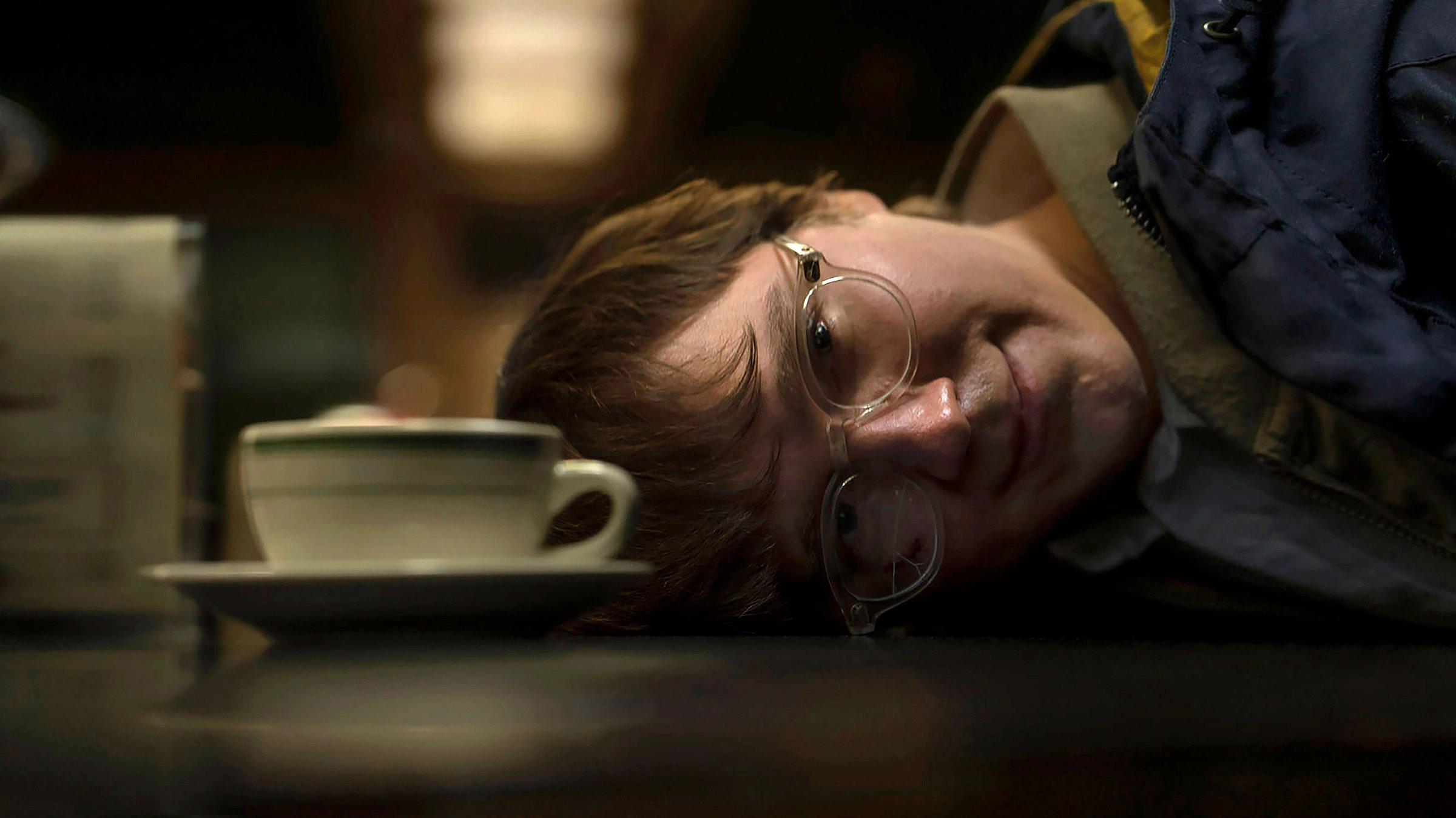
Nevertheless, vital to a noir serial killer mystery are well crafted clues, and Riddler’s are… not. Aside from some clever wordplay (“What does a liar do when he’s dead? He lies still”), the big breaks in the case have nothing to do with them. The central clue “You are El Rata Alada” is, frankly, complete nonsense. Red herrings are an important part of these stories, but most of the main character’s names being puns with winged animals is a weak misdirection. What makes the clues even more important is that Batman isn’t really trying to catch Riddler throughout the course of this movie. He is more than content following the breadcrumbs left for him to find “The rat”, in the hopes Riddler will be waiting at the end with open arms (Which ends up actually happening, but more on that later). In many of these one-step-ahead chase stories where our hero is outwitted at every turn, they have to evolve and break outside of the game to win (Or they fail to do so, and lose! What’s in the box!?).
Frustratingly, The Batman does neither. When our hero is incapable of solving Riddler’s half-baked clues, Catwoman solves the entire mystery offscreen by beating it out of a character we barely know, who just so happens to have a voicemail containing all of the damning evidence. Catwoman solving the case shouldn’t be an issue, but because the supporting cast are so thinly written they have no real weight to throw around within the plot. Zoë Kravitz makes a lot out of what little backstory she receives, but all Gordon does is accompany Batman around crime scenes and exchange the occasional one-liner. Colin Farrell’s Penguin is a standout in this regard; His impression of Robert DeNiro doing an impression of Al Pacino doing an impression of Joe Pesci adds needed levity and texture across from Pattinson.
The car chase between Batman and Penguin is by far the highlight of the film. Reeves is in his bag, and the hard-mounted cameras paired with largely practical effects bring the energy of historical greats like Bullet and The French Connection. The camera placement throughout the sequence is especially sharp; Penguin’s close-ups are shot from outside of his car, as rain and grit wash over the lenses. In Batman’s close-ups, we are in the car with him, reading every minute emotion racing across Pattinson’s eyes. The moment Batman sends Penguin’s car flipping violently through the air at the climax of the chase, the perspectives flip. We are seated inside with Penguin, experiencing his fear firsthand in a sequence reminiscent of Reeves’ 2010 horror flick Let Me In. We then watch our inverted hero approach our supposed antagonist through the latter’s eyes, in what is the signature shot of the film.

The Batman’s action set pieces are sparing and superb. Where they fall short of other prestige action cinema is that the sequences don’t affect or push the story forward in any way. The tension cranked up during the high-octane car chase is squandered in a resulting interrogation scene where Penguin scolds Batman and Gordon on their Spanish literacy and they instant message Riddler some wrong answers. The wing suit escape from the Gotham police building is a similarly isolated incident; Batman’s initial capture and subsequent shootout with the police leads to no change in the character’s relationships going forward.
It’s not just the action sequences that feel disconnected from the story – major themes woven into the fabric of Reeves’ Gotham are torn out at the last minute, protecting the character from facing the kind of adversity that might truly change him. The Riddler’s motivating ideology is to “unmask the truth about this city”, a web of corruption connecting Gotham’s criminal element, law enforcement, politicians, and the rich and powerful. We don’t get to sink our teeth into AOC stand-in Bella Reál’s (Jayme Lawson) platform or the politics around the Gotham Renewal fund, but come to learn the Riddler’s focus is the Wayne family and the blood on their hands. Gotham’s billionaire founding family revealed as a force of darkness is a fresh and intriguing angle for Reeves to take, but not four minutes after Carmine Falcone (John Turturro) breaks this news to Batman, Alfred (Andy Serkis) walks it back in the next scene. It was all a lie, and the Wayne family is once again an unimpeachable martyr of morality for Bruce to draw power from. Similarly, the police are let off the hook for their corruption, another tenet of the Riddler’s platform.
“Don’t you know your boys in blue work for me?”, says Falcone. “I guess we don’t all work for you,” Gordon responds as he opens the door to reveal fifty good apples waiting to arrest the mob boss.
I told myself I wouldn’t bring up The Dark Knight in this piece; It’s just not fair to Reeves & Co. But let me break my one rule, just this once. One of the best sources of underlying suspense in Christopher Nolan’s second Batman installment is the unreliability of Gordon’s unit. Due to backstories of their own, officers Wuertz and Ramirez are responsible for the Joker crashing Harvey Dent’s fundraiser as well as Dent and Rachel’s kidnapping. Reeves’ Gotham PD isn’t engaged with enough for that to organically develop, and bailing on these ideas built up throughout the film undermines Riddler’s potency as a truth-telling villain.
Paul Dano does an admirable job with his limited screen time, managing to crawl under the viewer’s skin in that uncomfortable, punch-me-in-the-face way that only he can. However, the Riddler doesn’t really push Batman at all, or vice versa. In the second act Bruce Wayne becomes Riddler’s public target, and instead of playing with the possibilities that opens for Batman in the game of cat and mouse, Reeves has Riddler stick an ill-timed bomb in his mailbox and then seemingly decide not to pursue Bruce any further. At the end of the second act, Riddler turns himself in. This is not unheard of in these types of stories, but in Se7en, Skyfall, and The Dark Knight (Last time. I promise.), this is a calculated chess move to complete some ulterior motive. In The Batman, its only function is to facilitate a charged but unearned faceoff scene between foes.
The final half hour is a complete mess. Riddler’s ultimate trick completely abandons the mission he’s been pursuing in exchange for a doomsday “Destroy the city” twist, which both Batman and the viewer only discover as it’s already happening. Riddler cools his heels in an Arkham cell (Real stroke of genius, bro!) as Batman beats up around 12 of his incel followers while presumed thousands die in the floods. The movie then ends three more times as we see Batman embrace the light while helping the national guard, a last-minute Joker introduction, and a Catwoman farewell.

Kurt Cobain didn’t actually live under the Young Street bridge; the myth has been refuted by those close to the late singer, as well as the author of his definitive biography. But knowing that, the Bruce Wayne metaphor tracks even closer; a disaffected young man lost in his own mythos, whose sheer conviction in what he’s supposed to mean influences the world around him. Cultivating and sustaining that investment from an audience sitting through a three-hour movie is a tall task, and The Batman succeeds with flying colors. This film made me feel something, and not just when Zoë Kravitz was on screen. It’s a visual masterpiece and I am in on this version of Gotham and its characters. Lucky me – HBO Max has already ordered a spin-off series about Farrell’s Penguin, and there appear to be more than a few other spin-offs and sequels on the horizon. Here’s hoping that with time, The Batman’s stories can achieve that level of greatness the original flew so maddeningly close to.
 RISHI RAJAGOPALAN
Leave a comment